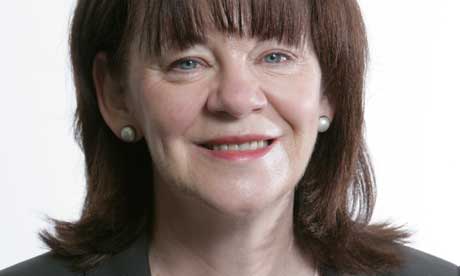
Colette Bowe, the incoming chair of Ofcom, has told MPs she would welcome expanding the communications regulator's remit to oversee Royal Mail, as recommended by last year's review of postal services by Richard Hooper.
Bowe, who is due to take over from Lord Currie in March, also said today that the communications regulator would make a "hard touch" interventionist decisions when necessary.
Royal Mail's current regulator, Postcomm, could cease to exist if the government adopts the recommendations in the report by Hooper, published in December, and gives responsibility to Ofcom.
"It's a darn good report and I read it with immense interest. In quite a lot of ways it fits with the other things Ofcom does because it's founded on the idea of a universal service obligation," Bowe said.
She added that Ofcom under her leadership would eliminate outmoded regulation and strive to reduce the regulatory burden on stakeholders, but this did not mean the organisation would actually be doing less regulation.
"I don't think the people in this country would be enthusiastic about a regulator that announced it was on track to wind down from regulation. Ofcom's regulatory mantra is not light touch but right touch. Ofcom can be quite hard touch when it needs to be," she told a joint session of the House of Commons culture, media and sport and business and enterprise select committees.
However, Bowe said Ofcom, which oversees the UK media and telecoms sectors, was a "prolific regulator" and needed to consider the burden of frequent consultations and reports not only on the industry but on other stakeholders. "If big organisations find it difficult to cope with the volume ... imagine if you were the policy officer for Age Concern," she added.
Bowe would not comment in any detail on how she saw the role of public service broadcasting in the future because she did not want to pre-empt next week's Ofcom report. However, she said children's television and wider access to football matches were both important issues for the regulator.
She also challenged parliament to widen Ofcom's powers to introduce a universal service obligation for broadband and to crack down on silent marketing calls.