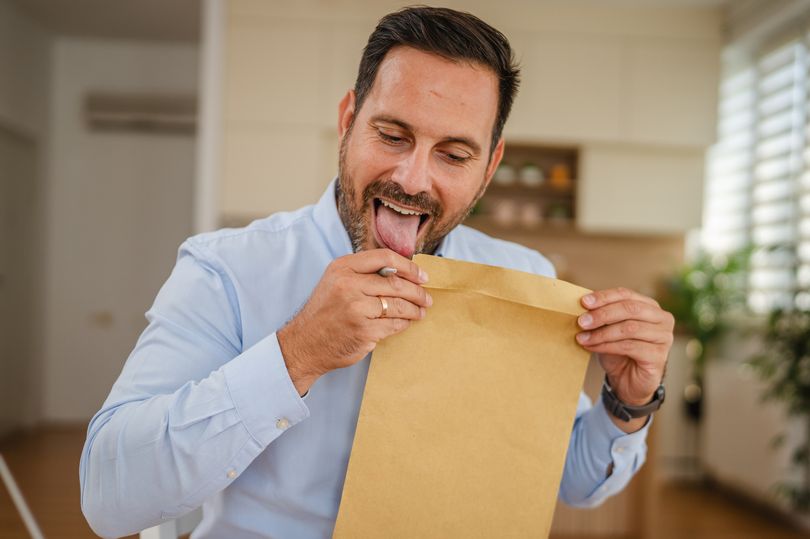
For those who still lick traditional envelopes, it's important to know that Royal Mail's latest automated sorting machines require a perfect, flat seal. This makes licking them directly a risky and unreliable choice for sending out large amounts of mail.
Royal Mail doesn't have a specific rule about licking envelopes to seal them. Instead, it emphasises the importance of having a good seal, regardless of how you do it. According to Royal Mail, all envelopes must be fully and securely sealed; its packaging guidelines state that items must be tightly closed at all edges and openings. The method you use to moisten the adhesive isn't important, as long as the flap is completely flat.
For standard consumer mail, the Royal Mail Packaging Guidelines urge that you secure all openings. On its website, an important message for the general public reads: "Seal securely with nylon or vinyl tape along all edges and openings." This is recommended if the envelope adhesive is weak.
Also, any staples or metal fastenings must have their sharp edges flattened and completely covered with tape. Doing so helps prevent injury or damage to the machine.
The only time Royal Mail has used the word "licking" in official advice is in relation to postage stamps. To protect modern 2D barcodes from being smudged, Royal Mail officially stated: "The days of licking stamps are over. Just peel your stamp and stick it in the top right-hand corner of your letter."
Royal Mail has rules to ensure envelopes are sealed tightly, as otherwise they can cause issues with its sorting machines. Because modern mail is processed by high-speed sorting machines, loose flaps or wet glue can jam the machinery, damage other mail, or tear your own letter.
Why can licking envelopes fail the Royal Mail's standards?
Although not prohibited, using saliva to seal your mail may cause issues with Royal Mail's mechanical sorting standards. Saliva tends to dry before forming a lasting chemical bond.
As reported by postal workers to BBC News, the latest sorting machines frequently tear open envelopes that are not sealed properly. Automated sorting machines sort letters by using blasts of compressed air. If a flap sealed with saliva has curled edges or a weak bond, these air blasts can completely open the envelope, causing the contents to spill out.
To make sure your letter meets the necessary standards without the chance of tearing, you can purchase self-seal options at the Royal Mail Shop or strengthen gummed envelopes with a piece of clear tape.
If you are sending bulk business mail using Mailmark, the requirements are much stricter and legally binding under wholesale contracts. According to the Royal Mail Mailmark Letters Specification, "envelopes should be securely sealed on the front, back, and all edges." Leaving the sides or corner gaps unsealed is an immediate compliance failure.
Adhesives must be completely dry and cured before you hand the mail over to Royal Mail. It adds: "Adhesives used must be dry and must not leak onto the open surface of the Letter."
The Royal Mail also says that "letters must not be stuck or caught together" due to excess glue escaping the flaps. The sealing adhesive must be no more than 80 microns thick and strong enough to cause the paper fibres to tear if someone tries to separate it.
